

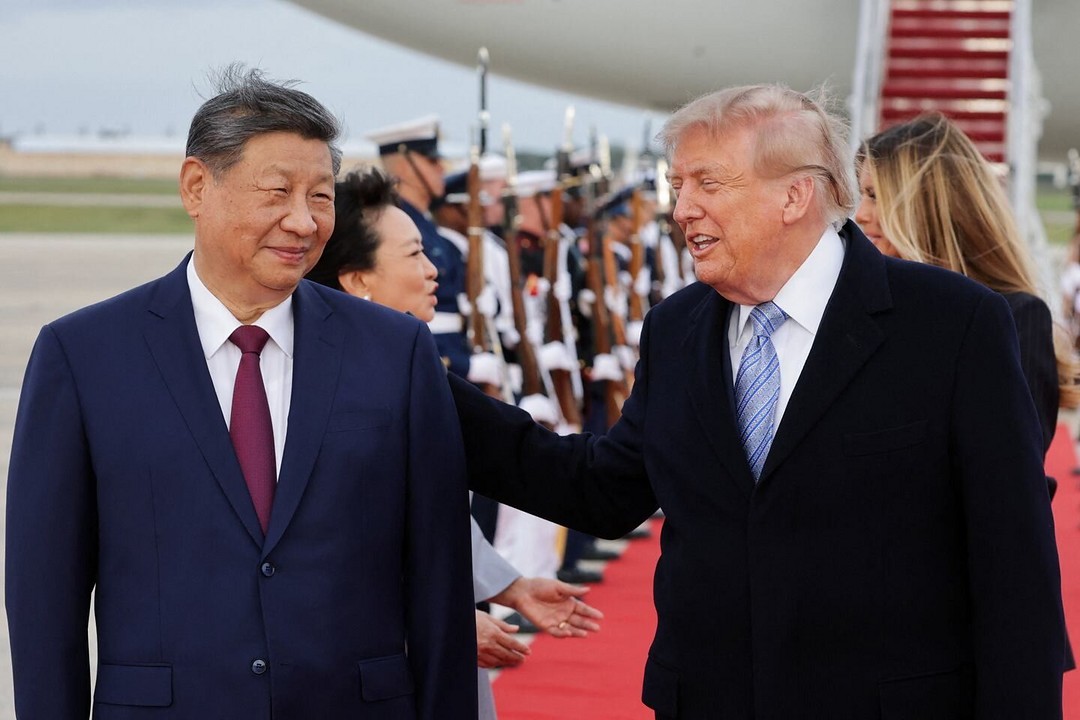
Donald Trump welcomed the Chinese leader on the tarmac at Joint Base Andrews with military honors, kicking off three days of summits focused on the trade truce, technology, and strategic balance.
Chinese President Xi Jinping landed this Wednesday at Joint Base Andrews, near Washington, to begin a three-day state visit to the United States. In an unusual gesture highlighting the importance the White House attaches to the meeting, President Donald Trump and First Lady Melania Trump went to greet the Chinese leader and his wife, Peng Liyuan, at the foot of the Air China state aircraft’s steps.
The reception featured a 30-meter red carpet, an honor guard in dress uniforms, and a flyover by two B-1 bombers alongside jet fighters. This marks Xi Jinping’s first state visit to Washington in 11 years; his last stay in the U.S. capital was in 2015, during the Barack Obama administration. The trip also represents the third in-person meeting between Trump and Xi since the Republican returned to power, following previous summits held in Busan (South Korea) and Beijing.
Extension of the Trade Truce and Tariff Negotiations
On the economic front, the visit began with a key announcement: U.S. Treasury Secretary Scott Bessent confirmed that Washington and Beijing had agreed to extend the trade truce until January 10, pushing back the original expiration date of November 10. Both governments aim to maintain channels of dialogue and make progress on the so-called “30-by-30” goal, which entails a reciprocal $30 billion reduction in tariffs on goods.
Unlike the entourage that accompanied Trump on his recent trip to the Chinese capital, Xi Jinping did not travel with a large delegation of corporate executives. However, the economic agenda will be heavily shaped by dilemmas surrounding artificial intelligence, the supply of strategic minerals, and the impact of import tariffs in the run-up to the U.S. midterm elections.
“Red lines” and the ceremonial agenda
Ahead of the meeting, the official newspaper People’s Daily highlighted the four “red lines” established by Beijing: the Taiwan issue, democracy and human rights, the political system, and China’s right to development. In particular, Chinese diplomacy seeks to halt U.S. arms shipments to Taiwan, citing the bilateral communiqués of 1982. For his part, Secretary of State Marco Rubio emphasized the responsibility of both powers to maintain high-level dialogue despite their differences.
The main event will take place at the White House, featuring a bilateral working meeting followed by a state dinner attended by prominent figures from the technology and business sectors. The itinerary will conclude on Friday with a joint visit by both leaders to the National Archives—where the U.S. Constitution and Declaration of Independence are on display—as part of the preparations for the host country’s 250th anniversary of independence.
Enviar comentarios

